Cognition
Latest Articles
View all articles Latest Articles

Cognition
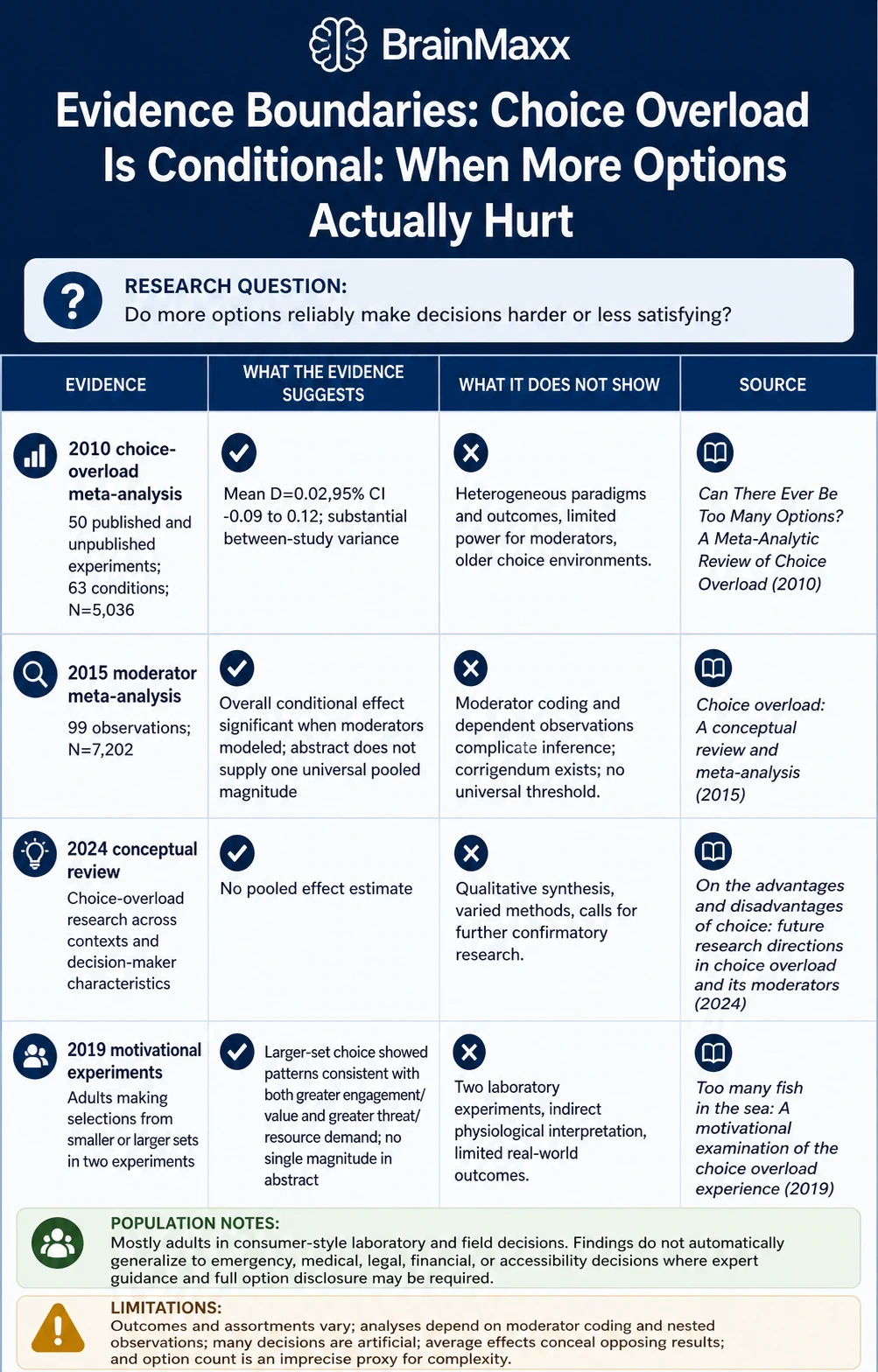
Choice Overload Is Conditional: When More Options Actually Hurt
Choice overload depends on complexity, preference uncertainty, goals, and context. Use transparent filters instead of arbitrary option limits.

Wellbeing
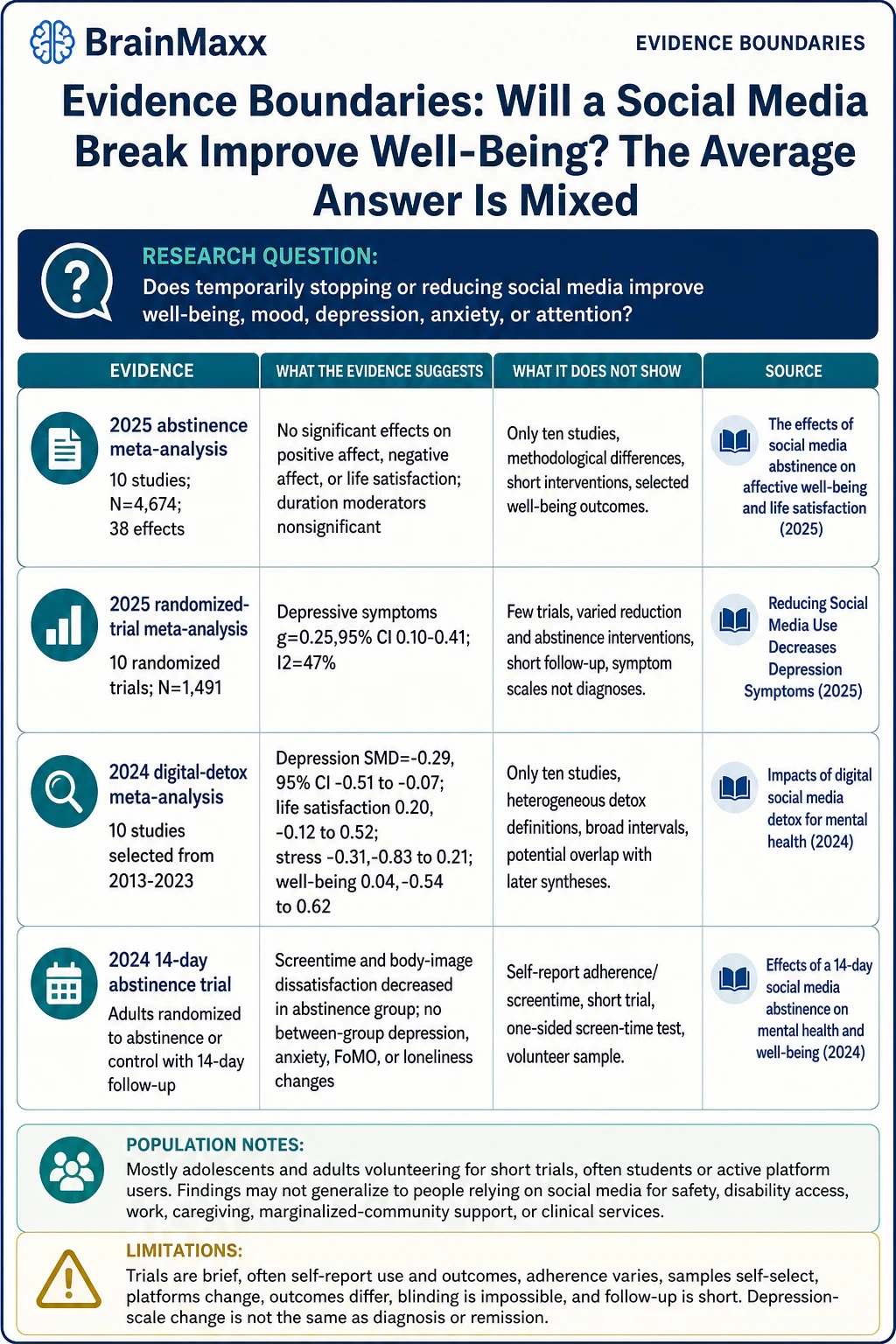
Will a Social Media Break Improve Well-Being? The Average Answer Is Mixed
Social media breaks do not reliably improve every well-being outcome. Match the experiment to your pattern and protect needed support.

Habits
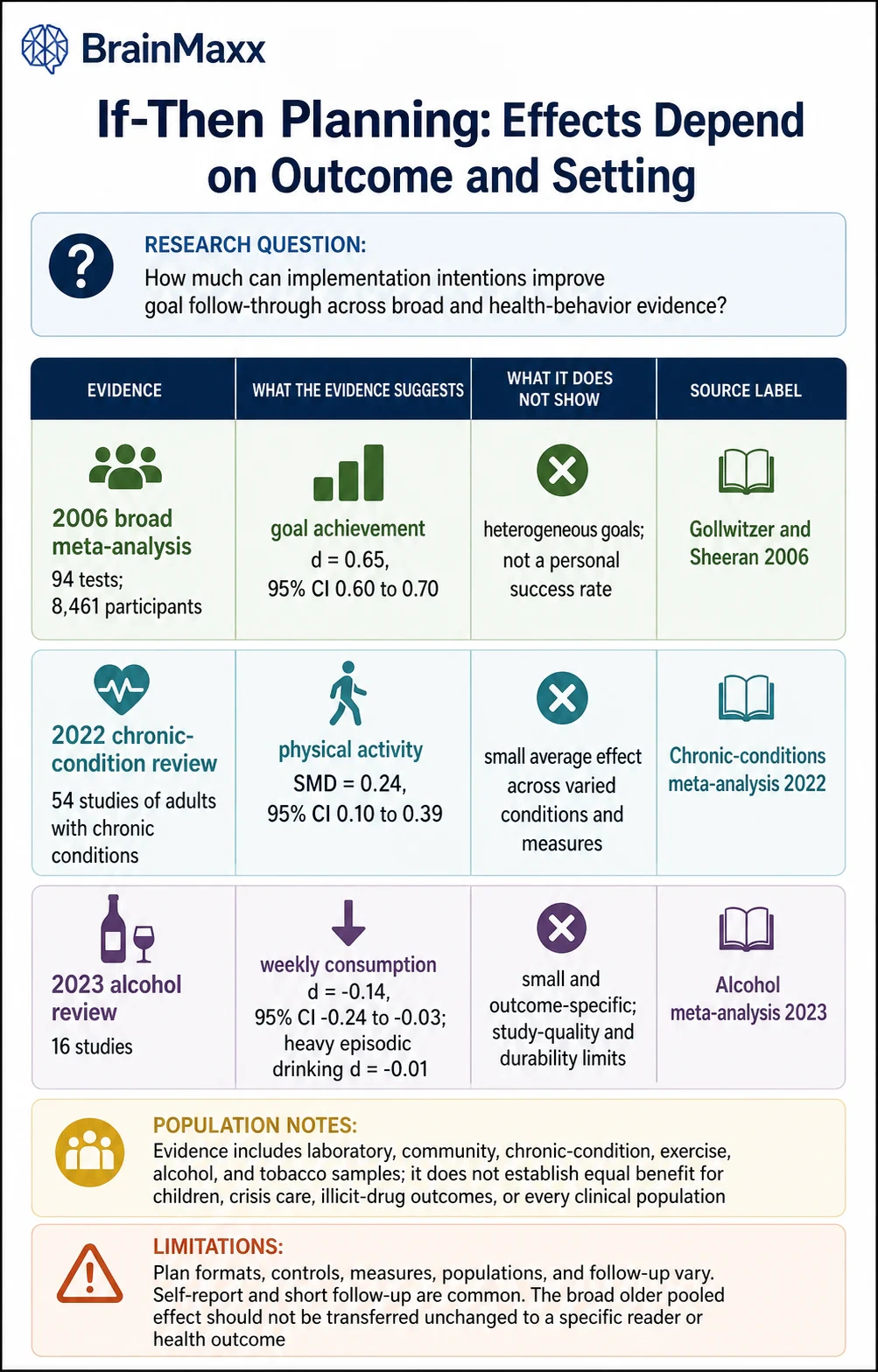
Why If-Then Plans Work Better Than Vague Intentions
An if-then plan links a specific cue to a feasible response. Make the cue observable, the action small, and the fallback explicit.

Wellbeing
What Gratitude Journaling Can Change—and What It Cannot
Gratitude journaling may produce small average benefits, but it is not a treatment substitute and should not suppress grief, anger, or action.

Wellbeing
Rumination vs. Problem-Solving: How to Tell the Difference and Break the Loop
Rumination repeats causes and consequences without movement. Problem-solving defines a controllable target and tests one next action.

Wellbeing
Self-Compassion After a Mistake Is Not Letting Yourself Off the Hook
Self-compassion can coexist with responsibility. Use a four-part repair note without turning one mistake into an identity verdict.

Cognition
Why Unfinished Tasks Keep Interrupting You—and How to Close the Loop
Unfinished work can keep resurfacing in attention. A specific written return plan may reduce that interference better than repeatedly telling yourself not to think about it.

Habits
Why Procrastination Feels Like Relief—and How to Break the Loop
Procrastination can feel relieving because avoidance lowers discomfort for a moment. Use a small, evidence-aware experiment to interrupt that loop.
Cognition
Decision Fatigue: How To Lower The Noise Before You Choose
Decision fatigue is easier to manage when you reduce low-value choices, use defaults, and protect attention for decisions that truly matter.

Relationships
Healthy Boundaries: Say What Changes Without Starting A Fight
Healthy boundaries work best when they name your limit, state the behavior that will change, and keep the tone direct instead of punitive.

Stress
Stress Recovery After Overload: A Practical Reset Guide
Stress recovery works best when you reduce demands, name the load, restore basic routines, and use support before pressure turns chronic.

Therapy
Therapy Basics: What To Expect From A First Session
A first therapy session usually covers your concerns, history, goals, fit, confidentiality, and next steps. You do not need to arrive perfectly prepared.

Habits
Tiny Habits That Stick: Use Friction Instead Of Willpower
Habits stick more reliably when the action is small, the cue is obvious, and the environment reduces friction before motivation is needed.